Grocery shop software for shops that sell by the piece and buy by the carton
A grocery buys sugar in a sack and sells it in a kilo, buys soap in a carton of twenty-four and sells it one bar at a time. Most stock systems assume the unit you buy is the unit you sell, and the count is wrong from the first delivery. Duka365 keeps both, on a phone, in Swahili or English.
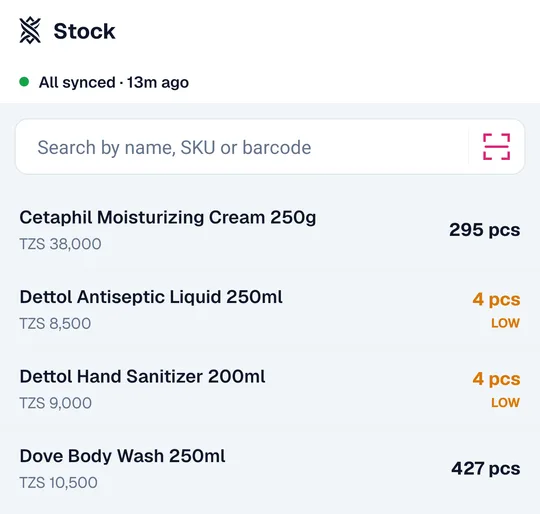
What groceries keep running into
You buy a carton of 24 and sell singles, so the stock count never matches the shelf.
Each product carries a pack quantity — how many units come in the carton you buy. Record a purchase in cartons and the shelf count goes up in pieces. One delivery, one entry, and the number stays right.
Bread, milk and yoghurt go off, and you find out when a customer brings it back.
Anything perishable carries an expiry date, and you choose how many days ahead you want warning. Duka365 texts you before it turns, so it is discounted while it still sells rather than thrown away.
Fast lines run out on a Saturday and the slow ones sit there tying up your money.
Every product has a minimum stock level and a fast-mover rank. You get an alert before the fast lines run dry, and the reports show you which stock has been sitting — which is money on a shelf rather than in a till.
Neighbours take things on credit and the notebook is a mess by month end.
Record it against the customer with a due date. Their balance and what is overdue are on their name, so chasing it is reading a screen rather than an argument about what was taken in March.
You know what came in today. You do not know what you actually made.
Every product carries what you paid as well as what you charge, so the reports show profit rather than takings. A busy day and a profitable day are not the same day, and the difference is usually the margin on the fast lines.
A day behind the counter
- 1
A supplier drops four cartons of soap. You record the purchase in cartons; the shelf count goes up by ninety-six bars.
- 2
You sell through the morning — each sale takes the pieces off the count as it goes.
- 3
A neighbour takes a bag of rice on credit. It goes on her name with a due date.
- 4
A text arrives: two lines are below your minimum. They go on the list for the next supplier run.
- 5
At close you look at the day: what sold, what it cost you, and what you actually made on it.
Questions shop owners ask
- Do I have to count everything to start?
- No. Add your main lines with what is on the shelf now and start recording sales. Most shops build the rest up over a week or two as stock moves.
- Does it work when the network is bad?
- Duka365 runs in your phone browser and is built to be light. It is designed for the connection you actually have, not the one in an advert.
- Can my counter staff use it without seeing my profit?
- Yes. Staff record sales and serve customers. Buying prices, profit and reports stay with the owner.
- What does it cost?
- The free plan covers 100 products and 150 sales a month. Pro is TSh 35,000 a month for unlimited products and sales, and paying for a year gives you three months free.
Start with what is on the shelf today
Add your main lines, record a week of sales, and see whether the numbers tell you something the notebook did not. It is free, there is no card, and nothing is charged until you decide it is worth it.